As 2025 draws to a close and we reflect on the events that captured global attention this year, the October Louvre Heist is undoubtedly one of the most attention-grabbing. Occuring in broad daylight in a Hollywood-esque feat, a group of robbers broke into the Galerie d’Apollon at the Louvre Museum in Paris and stole eight historic pieces from the royal jewellery collection. The theft was valued at roughly €88 million with the whole operation reportedly taking less than 8 minutes. Currently, there is still no trace of the stolen jewels, despite four people believed to have been involved with the crime being arrested.
Taking a step back from the details of the still developing case this article intends to explore the ways sociological theory can be applied to the heist, analysing the ways crime has become normalised and glorified in the modern day, applying Merton’s Strain Theory and Rational Choice Theory, and ideating how the values of society lead individuals to crime.
i Cultural Normalisation: Glorification of Crime and Rebellion
Gaining viral attention on social media, the heist illicited a range of content being produced online from investigative and comedic. Moreover, the news coverage and inherent nature of the crime feeding into a movie-like narrative may have likely impacted the public excitement and perception of the event. Titles of news articles such as “The Daring Daylight Heist That Shook The Louvre Museum In Paris” frame the crime in a way that is more akin to a blockbuster film than a serious crime. The glorification of complex crime and clever criminals in literature and cinema has a long historical standing, which could be one of the reasons why the Louvre heist has gained so much global engagement and intrigue. The classic story of Robin Hood is one of the most noteable examples of this phenomena. The Louvre heists objective of stealing historical crown jewels could be seen as targeting the powerful establishments in control which resonates with the French cultural narrative of anti-aristocracy.
The choice to rob the Louvre during broad daylight is another dimension that should not be neglected. It significantly enhances the risk of failure, and yet they chose to do it anyway. This could suggest that the theives maybe had secondary motives of wanting to be seen committing the crime. Perhaps this was done as a way to make a statement, but it also may have been done in an attempt to gain media attention. There has been a noticeable leaning in recent largescale criminal acts that have been enacted to communicate a message, such as the Luigi Mangione/United Healthcare incident and the assassination of Charlie Kirk.
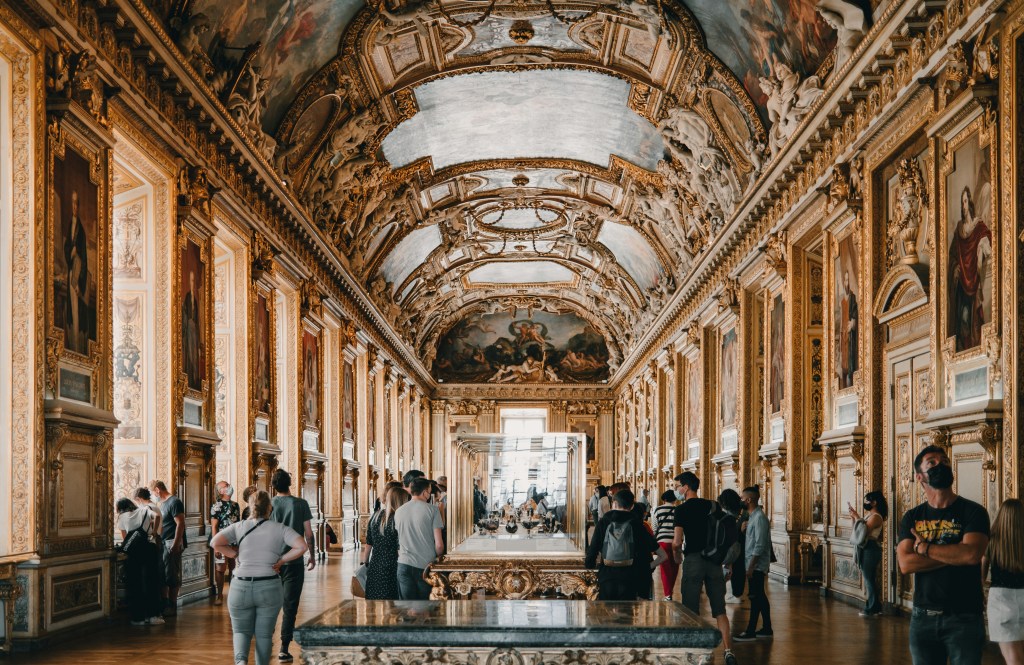
The framing of the event that occured online may’ve also had an affect not just public opinion but also the self-concept of the offenders themselves. The fame and sudo-fanbase that amassed from the general public in the aftermath of the crime may’ve impacted the way the offenders view themselves. Their personal narratives may’ve shifted from being people who robbed an art gallery for personal gain and instead may’ve allowed the robbers to justify their actions, and/or view themselves as rebels or revolutionaries.
Young adults viewing glorified crimes in the media may also imagine themselves in the narrative, or see it as a way to earn fame and public attention. News stories outlining the audacity, organisation and boldness of large scale crime may normalise risk taking behaviours and pitch extreme risk as being worth it.
This is an example of a cultural script shaping behaviour. When news stories and social media discourse tells audiences about what is admirable or exciting, the general public may begin to internalise these scripts and alter their behaviour to match it – whether it be consciously or unconsciously.
ii Rational Choice and Strain Theory
The Louvre Heist involved an evident amount of forethought and planning, including the use of a truck lift, the speed of the heist, and the precise entry point that was selected. This behaviour can be applied to the theory of Rational Choice. The extensive plotting that would have had to take place suggests that the robbers had weighed up the risks (jail time, risk of being hurt or killed, global shaming) versus the rewards (the monetary gain), and decided that the rewards outweighed the risk. New information from a report by Al Jazeera has revealed that two of the four suspects were a couple with children, meaning that the allure of the reward even outweighed the risk of losing the ability to care for their children.
From Merton’s structural strain theory perspective, criminal acts are often explained as being the result of a society who pushes individuals to achieve big goals such as wealth and success, but will block their access to fair and legal routes of attaining it through bureaucracy and systemic oppression. This inability to achieve what society holds as success results in strain, and can lead to rule-breaking. In the case of the Louvre Heist, the robbers may have hailed from lower socio-economic backgrounds. Those charged have been described as local people from Seine-Saint-Denis, a département north of Paris that is often described in media and public statistics as one of the poorer and more socially challenged in France. Furthermore, one of the suspects is reported to have previously worked as a delivery man and garbage-collector. These lifestyle factors are not guarentees of criminal behaviour, however strain theory believes there is a correlation between them.

iii Final Thoughts
When paired with sociological theory we can impactfully analyse the Louvre Heist from a different perspective. Rather than placing the blame wholly on the individual perpetrators and labelling them as ‘bad apples’ we can see the obvious societal factors that may have led them to believe that commiting the robbery was worth the accompanying risks. We live in a world of conflicting messages; ones that promote and glamorise the intelligence and courage of criminals, but also demonises crime as personal failings. Whether the crime was commited as a way to communicate a message (and break the glass ceiling – pun intended), or enacted out of desire for money we may not yet know. Either way, it highlights the uncomfortable societal and economic pressures that individuals live under and the ways that supportive narratives in news may work to normalise and perpetuate crime. As long as society continues to value achievement and wealth, we will see high profile crime, both failed and successful, continuing as well.

C. Wesley, Published 26 November 2025
iv References
Al Jazeera. 2025. Four more suspects arrested over Louvre heist. Al Jazeera. https://www.aljazeera.com/news/2025/11/25/four-more-suspects-arrested-over-louvre-jewel-heist#:~:text=The%20four%20already%20charged%20over,lift%20used%20during%20the%20robbery.
Kassam, A. 2025. Louvre jewel heist by petty criminals, not organised professionals, says Paris prosecutor. The Guardian. https://www.theguardian.com/world/2025/nov/02/louvre-jewel-heist-petty-criminals-paris-prosecutor
Khatsenkova, S. 2025. Louvre museum to remain shut after spectacular heist as hunt for thieves continues. EuroNews. https://www.euronews.com/culture/2025/10/20/louvre-museum-to-remain-shut-after-spectacular-heist-as-hunt-for-thieves-continues
Nickerson, C. 2025. Merton’s Strain Theory Of Deviance In Sociology. Simply Psychology. https://www.simplypsychology.org/mertons-strain-theory-deviance.html
Oltermann, P. 2025. Louvre heist losses put at almost €90m as museum’s head prepares to face senators. The Guardian. https://www.theguardian.com/world/2025/oct/21/louvre-heist-losses-put-at-almost-90m-as-museums-head-prepares-to-face-mps?
Walker, A & Pradier, P. 2025. Four new arrests made following Louvre jewellery heist. BBC. https://www.bbc.com/news/articles/cr5zm7n8ngpo
India Today Global. 2025. The Daring Daylight Heist That Shook The Louvre Museum In Paris. https://www.youtube.com/watch?v=u5I49w3KGu0
 The Social Observer
Leave a comment